
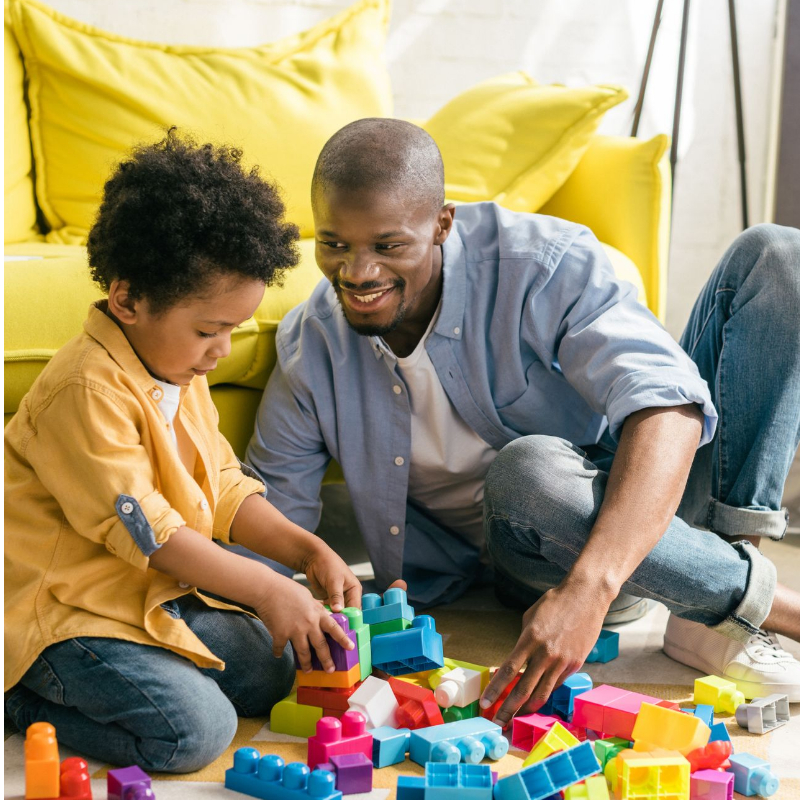
Play with a Purpose: Turning Toy Time into Learning Opportunities
For parents of children with autism, play can sometimes feel like a puzzle. You might read books or hear advice about “teaching social skills” or “building language,” and you feel pressure to turn every moment into a therapy session.
It is easy to fall into the trap of thinking that learning only happens at a desk with flashcards. But for young children, play is their primary language. It is the most natural, effective way for them to learn about the world, communication, and relationships.
The best part? You don’t need expensive educational gadgets. You can use the blocks, cars, and bubbles you already have at home to build incredible skills.
Here are four simple strategies to turn playtime into learning time, without ruining the fun.
1. Follow Their Lead (The “Child-Led” Approach)
As adults, we often have a preconceived notion of how a toy should be used. We might think, “We have to put the puzzle pieces in the slots.” But if your child is more interested in stacking the puzzle pieces like a tower, or spinning them on the floor, that is okay.
The Strategy:
Instead of trying to redirect them to “play the right way,” join them in their way. If they are spinning the wheels of a car instead of driving it, grab another car and spin the wheels too.
The Benefit:
This builds rapport and joint attention. When you enter their world rather than forcing them into yours, you signal that you are a fun partner. Once you have their attention, you can slowly introduce new variations (e.g., “Ready, set… spin!” or spinning it fast vs. slow).
2. Be a Sportscaster (Narrating Play)
Many parents naturally ask questions during play: “What color is that?” “What is the cow doing?” “Where does the train go?”
While well-intentioned, too many questions can feel like a test, which might cause a child to withdraw.
The Strategy:
Swap the questions for comments. Act like a sportscaster describing the game.
Instead of: “What color is the block?”
Try: “You have the blue block. Up, up, up! It’s a tall tower. Crash!”
The Benefit:
This exposes your child to language without the pressure to perform. It models the words for the actions they are currently doing, making it easier for them to connect the word (“Crash”) with the event.
3. The “Helpful Pause” (Creating Communication Opportunities)
If we anticipate our child’s needs too quickly—opening the bubbles immediately, handing them the next track piece before they ask—we inadvertently remove the need for them to communicate.
The Strategy:
Introduce a small pause or a “silly mistake” to encourage your child to communicate (using words, gestures, or eye contact).
Bubbles: Blow bubbles, then close the lid tight. Wait for them to hand it to you or look at you expectantly.
Swings: Push them once, then catch the swing and wait. Look at them with an excited face. Wait for a sound, a look, or a movement that says “more.”
The Benefit:
This teaches requesting (or “manding”). It shows the child that their communication has power—when they communicate, fun things happen.
4. Expand by One Word
If your child is already speaking or using a communication device, you can use play to gently expand their vocabulary.
The Strategy:
The “Plus One” rule. Repeat what your child says and add one word.
If they say: “Car.”
You say: “Fast car!” or “Blue car!”
If they say: “Push.”
You say: “Push me!”
The Benefit:
This validates what they said (letting them know you heard them) while modeling the next step in their language development.
Keep It Fun
The most important rule of “playing with a purpose” is to ensure it remains play. If your child gets frustrated or walks away, back off on the strategies and just focus on the connection.
The goal isn’t to create a perfect student; it’s to show your child that communicating and interacting with you is the most fun game of all.

0 Comments